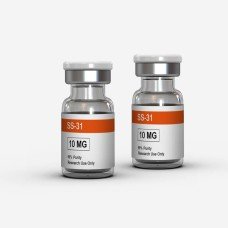
SS-31 (Elamipretide): The Mitochondrial Peptide That’s Changing the Game in Anti-Aging and Disease Prevention
Introduction: Why SS-31 Matters
If you’ve ever wondered why we age, get fatigued, or develop diseases like heart failure and neurodegeneration, look no further than the mitochondria—your cells’ power generators. Mitochondrial dysfunction is a root cause of aging and many chronic illnesses. Enter SS-31 (Elamipretide), a cutting-edge peptide engineered to reverse mitochondrial damage at the cellular level.
In this article, we’ll break down:
-
What SS-31 is and how it works
-
Its benefits across various systems (brain, heart, kidneys, muscles)
-
Proper dosing and administration protocols
-
Real-world applications and what research says
-
Why this peptide may be the future of regenerative medicine
What Is SS-31 (Elamipretide)?
SS-31, also known as Elamipretide, is a synthetic tetrapeptide (D-Arg-2’6′-dimethylTyr-Lys-Phe-NH2) that uniquely targets cardiolipin—a phospholipid found in the inner mitochondrial membrane. It’s engineered to improve mitochondrial efficiency and reduce oxidative damage, which makes it incredibly powerful in both anti-aging and disease recovery applications.
Unlike most antioxidants that float aimlessly in your bloodstream, SS-31 accumulates directly in the mitochondria, where oxidative stress begins. That’s why it’s showing such promise in clinical and research settings.
Mechanism of Action: How SS-31 Works
SS-31:
-
Penetrates cell membranes and localizes in mitochondria.
-
Binds to cardiolipin, a key component of mitochondrial membranes.
-
Stabilizes mitochondrial structure, preventing cytochrome c release (cell death).
-
Reduces reactive oxygen species (ROS) generation.
-
Improves electron transport chain efficiency, boosting cellular energy (ATP).
-
Prevents mitochondrial swelling and apoptosis, especially in stressed or damaged tissues.
This makes SS-31 a top candidate for treating diseases rooted in mitochondrial dysfunction.
Benefits of SS-31
1. Heart Health
-
Reduces ischemia-reperfusion injury in cardiac events.
-
Enhances left ventricular function in patients with heart failure.
-
Shown to improve exercise tolerance in older adults with heart disease.
2. Neuroprotection
-
SS-31 has been shown to reduce neuroinflammation, oxidative damage, and improve cognition in models of Alzheimer’s and Parkinson’s disease.
-
Protects synaptic function and slows neurodegeneration.
3. Kidney Health
-
Helps prevent ischemic kidney injury.
-
Improves mitochondrial function in renal tubular cells.
4. Muscle and Fatigue
-
SS-31 enhances muscle endurance and performance, particularly in the elderly.
-
Reduces exercise-induced fatigue by improving ATP production.
5. Anti-Aging
-
SS-31 directly addresses mitochondrial aging, a hallmark of the aging process.
-
Early trials suggest it can improve cellular vitality and reduce visible signs of aging when combined with other regenerative therapies.
Protocol: How to Use SS-31
❖ Common Dosing Protocols
-
Dosage: 5–10 mg daily for anti-aging/general mitochondrial support. Clinical trials use up to 40 mg/day.
-
Route: Subcutaneous injection is preferred for systemic effects.
-
Cycle Length: 4–8 weeks on, 2–4 weeks off.
For best results, pair SS-31 with other mitochondrial support like NAD+ precursors, CoQ10, and intermittent fasting.
❖ Advanced Protocol for Chronic Fatigue / Cardiac Support
-
20 mg/day SC, split into 2 doses (AM and PM)
-
Duration: 6–12 weeks
-
Stack with: BPC-157 for tissue repair, MOTS-c for endurance, or NAD+ for synergistic mitochondrial repair.
Always begin with a test dose to assess tolerance and consult a knowledgeable practitioner.
How to Reconstitute and Store SS-31
-
Reconstitution: Use sterile bacteriostatic water. Add slowly to the vial (typically 1 mL per 10 mg).
-
Storage: Store reconstituted peptide in the refrigerator. Unreconstituted vials can be stored at room temp or refrigerated.
-
Shelf Life: Up to 6 weeks when refrigerated. Do not freeze.
Side Effects and Safety
SS-31 has shown an excellent safety profile in clinical trials.
Mild reported side effects include:
-
Injection site irritation
-
Mild nausea or headache (rare)
-
Temporary flushing
There are no serious adverse effects reported in human trials even at high doses, making it one of the more promising therapeutic peptides available.
Why SS-31 Is the Future of Regenerative Medicine
Mitochondrial damage is behind everything from fatigue and aging to heart failure and Alzheimer’s. SS-31 is the first mitochondrial-specific peptide with human clinical data showing it can restore energy, reduce damage, and regenerate cellular function.
As more people look for solutions beyond surface-level supplements, SS-31 is poised to be a major tool in the longevity stack of the future.
Final Thoughts
SS-31 (Elamipretide) isn’t just another peptide—it’s a mitochondrial master key.
Whether you’re looking to boost energy, recover from chronic illness, or simply fight aging at its root cause, SS-31 deserves your attention.
Related products